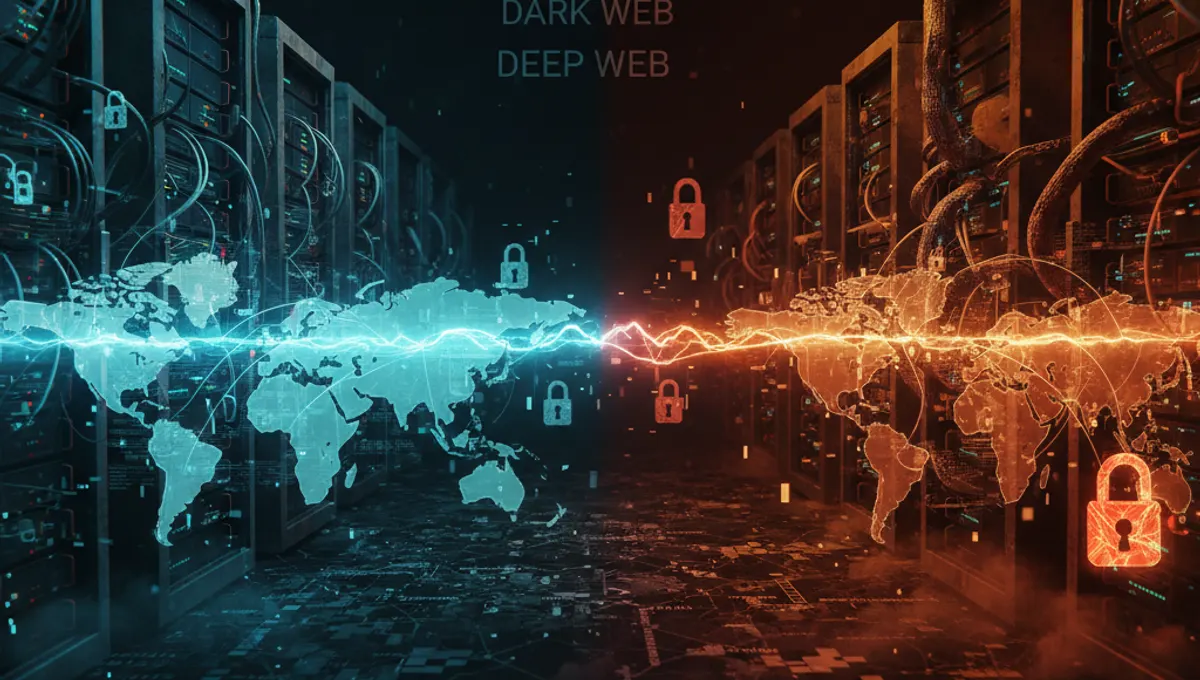
What Is the Deep Web
The deep web encompasses all internet content that search engines like Google cannot index. This includes your email inbox, banking portal, subscription services, medical records, and legal documents. It also covers academic journals behind paywalls, corporate intranets, and password-protected forums. The deep web is not hidden by design—it's simply not publicly searchable. Most internet users access the deep web daily without realizing it. It's estimated to be significantly larger than the indexed surface web. The deep web is generally legal and safe; you're already using it when you check your bank account or access your email.
What Is the Dark Web
The dark web is a deliberately concealed network layer within the internet, accessible only through specialized software like Tor Browser. It uses multiple layers of encryption and routing to mask user identity and location. Websites on the dark web use .onion addresses instead of standard domain extensions. The dark web represents a tiny fraction of the deep web. It was originally developed for legitimate privacy purposes—protecting journalists, activists, and dissidents in oppressive regimes. However, the dark web also hosts illegal marketplaces and content. Not everything on the dark web is illegal, but the anonymity it provides attracts both legitimate privacy advocates and criminal activity.
How They Differ in Access and Purpose
Accessing the deep web requires only standard credentials—a username and password. Your regular browser works fine. Accessing the dark web requires downloading Tor Browser and understanding how to navigate .onion sites. The deep web exists for practical reasons: banks need secure servers, hospitals need patient privacy, companies need internal networks. The dark web exists primarily for anonymity. Some use it for legitimate purposes—circumventing censorship, protecting privacy, accessing information in restricted countries. Others use it for illegal activities. The key difference: deep web content is private but not hidden; dark web content is both private and intentionally hidden. One is a natural consequence of internet architecture; the other is deliberately engineered for concealment.
Security Considerations for Each
Deep web access is generally secure if you use strong passwords and enable two-factor authentication on your accounts. The risks are standard: phishing, weak credentials, malware. Dark web access introduces different risks. Even with Tor Browser, users can compromise anonymity through careless behavior—using identifying information, visiting malicious sites, or downloading files without caution. Using a VPN alongside Tor adds a layer of protection, though this is debated among security experts. Never maximize your browser window on Tor—it can reveal your screen resolution and compromise anonymity. Disable JavaScript in Tor Browser settings. Don't open files downloaded from the dark web unless you're certain they're safe. The dark web's anonymity is powerful but fragile; one mistake can expose your identity.
Common Misconceptions
Many people believe the deep web is dangerous or illegal—it isn't. Your email, banking, and medical records live on the deep web. Conversely, not everything on the dark web is illegal. Journalists use it to communicate securely, activists use it to organize, and privacy advocates use it to protect their data. Another misconception: the dark web is easy to navigate. It's not. Finding legitimate resources requires knowledge. Many .onion sites are scams, honeypots, or malware distribution points. The dark web is not a lawless marketplace despite media portrayals. Law enforcement agencies actively monitor dark web activity and have successfully prosecuted criminals. Finally, accessing the dark web is not inherently illegal in most countries—but the activities you engage in there may be.
Why the Distinction Matters
Understanding the difference protects you from unnecessary risk and misinformation. If you need privacy for legitimate reasons—protecting sensitive documents, accessing information in a censored region, or communicating securely—you may need the dark web. If you simply want to protect your email or banking data, the deep web with strong passwords and two-factor authentication is sufficient. Conflating the two leads to poor security decisions. Someone might avoid the deep web entirely out of fear, missing legitimate privacy tools. Conversely, someone might assume the dark web is just a hidden version of the regular internet and take dangerous risks. The distinction also matters legally. Accessing the deep web is routine and legal. Accessing the dark web is legal in most jurisdictions, but activities conducted there may not be. Know what you're entering and why.
Getting Started Safely
If you're exploring the dark web for legitimate reasons, start with Tor Browser from the official Tor Project website. Never download it from third-party sources. Read the documentation carefully. Understand that anonymity requires discipline—it's not automatic. Consider using a dedicated device or virtual machine to isolate your dark web activity. If you're concerned about deep web privacy, focus on strong passwords, two-factor authentication, and reputable VPN services for general browsing. For dark web exploration, research communities and resources before visiting. Verify .onion addresses through multiple sources. Start with established sites focused on privacy, journalism, or activism rather than marketplaces. Keep your operating system and all software updated. Disable plugins in Tor Browser. Never resize your browser window. These practices won't guarantee safety, but they reduce preventable mistakes.
Frequently asked questions
Is accessing the deep web illegal?
No. The deep web is part of normal internet use. You access it every time you check email, online banking, or subscription services. It's private but not hidden. Accessing it requires only standard credentials, not special software.
Is accessing the dark web illegal?
Accessing the dark web itself is legal in most countries. However, activities conducted on the dark web may be illegal. Law enforcement monitors dark web activity and prosecutes crimes. Use it responsibly and understand local laws.
Do I need a VPN to use Tor?
Using a VPN with Tor is optional and debated. A VPN can hide the fact that you're using Tor from your ISP, but it adds complexity. If you use a VPN, connect before opening Tor Browser. Never use a VPN after Tor, as it defeats the purpose.
How do I find legitimate dark web sites?
Research communities focused on privacy and security. Verify .onion addresses through multiple sources before visiting. Established sites related to journalism, activism, and privacy are safer starting points than marketplaces. Never trust a single source for an address.
Can I be tracked on the dark web?
Tor provides strong anonymity, but mistakes can expose you. Maximizing your browser window, using identifying information, downloading files carelessly, or visiting malicious sites can compromise anonymity. Discipline and caution are essential.